What to Look for in a Quality Wood Pellet: Understanding Certifications and Specs

Not all wood pellets are created equal. Here’s how to evaluate pellet quality using certifications, specs and performance data.

If you’ve ever wondered what separates a good pellet from a bad one—or what all those certifications, numbers and acronyms actually mean—you’re not alone. Pellet quality comes down to a handful of measurable specs, and knowing what to look for can help you choose higher-performing fuel for your stove. Here’s how to decode the key certifications and how woodpellets.com ensures the pellets you buy truly meet quality standards.

What Is PFI Certification for Wood Pellets?
The most recognized quality standard in the U.S. is the Pellet Fuels Institute (PFI) certification. When a pellet is PFI certified, it means it has been independently tested and verified to meet strict fuel-quality requirements. These include:

-Low ash content for cleaner burns and fewer cleanings
-Consistent moisture levels so pellets burn efficiently
-Durability and density testing to prevent crumbling or excessive fines (a.k.a pellet dust)
-BTU performance to ensure strong, steady heat output (BTU stands for British Thermal Unit and it’s a unit of measurement for heat energy)

In short, the PFI certification tells you the pellets should burn hot, clean and reliably.

One thing worth noting: the word “Premium” isn’t owned or regulated by PFI. That means any manufacturer can slap it on a bag whether they’ve been through the certification process or not. Without actual PFI certification behind it, the word “Premium” on its own doesn’t guarantee the pellets have been tested to any particular standard. 

What Do the Numbers Mean?
Look for key specs like ash percentage, moisture content and fines. Lower numbers in these categories generally mean better performance. For BTUs, it’s the opposite—higher numbers mean more heat output per pound. Species descriptions—like hardwood, softwood or blends—can also give you clues about heat output and ash characteristics. As a general guide, here’s what to look for in a quality residential pellet:

-Ash content at or below 1%
-Moisture at or below 8%
-Fines at or below 0.5%
-BTUs of at least 8,000 per pound

These numbers align with PFI Premium grade standards—the baseline for most pellet stoves on the market. Species descriptions—like hardwood, softwood or blends—can also give you clues about heat output and ash characteristics.

How Woodpellets.com Ensures Transparency and Quality
At woodpellets.com, quality transparency isn’t just a promise—it’s part of our process. We work closely with manufacturers who participate in industry-standard testing and conduct independent quality checks throughout the year. This additional testing verifies that our pellets consistently meet the specs we publish. Beyond that, we provide detailed product descriptions, performance notes and customer reviews so you can compare brands with confidence—not guesswork.Quality pellet fuel starts with the right certifications and clear specifications. With that foundation, you can trust you’re choosing clean, efficient and reliable heat—especially when the pellets come vetted by woodpellets.com.

Frequently Asked Questions

What does PFI certification mean?
PFI stands for Pellet Fuels Institute. A PFI certification means the pellets have been independently tested and verified to meet specific standards for ash content, moisture, durability and heat output. It’s the most widely recognized quality standard for wood pellets in the United States.

Does “Premium” mean a pellet is PFI certified?
Not necessarily. The word “Premium” isn’t owned or regulated by PFI, so any manufacturer can use it. Without actual PFI certification, there’s no guarantee the pellets meet PFI standards.

What should I look for in wood pellet specs?
For a quality residential pellet, look for ash content at or below 1%, moisture at or below 8%, fines (pellet dust) at or below 0.5%, and BTUs of at least 8,000 per pound. These align with PFI Premium grade standards. The lower the ash, moisture and fines, the cleaner and more efficiently the pellets will burn. Higher BTUs mean more heat per pound.

Are hardwood or softwood pellets better?
It depends on what matters most to you. Softwood pellets produce more BTUs per pound and typically produce less ash. While hardwood pellets are typically a little less expensive and more widely available in some regions. Both can perform well as long as they meet PFI quality standards.

What does BTU mean?
BTU stands for British Thermal Unit and measures heat energy output. A higher BTU rating means more heat per pound of pellets. Most quality wood pellets fall in the range of 8,000 to 8,700 BTUs per pound.

Keeping Your Furry Friends Safe by the Pellet Stove

When cold weather settles in and the pellet stove becomes the heart of the home, pets are usually the first to claim the warmest spot. But “cozy” shouldn’t come at the expense of safety. With a few simple precautions, you can keep your home toasty and pet-friendly all season long.

1. Create a Safe Distance

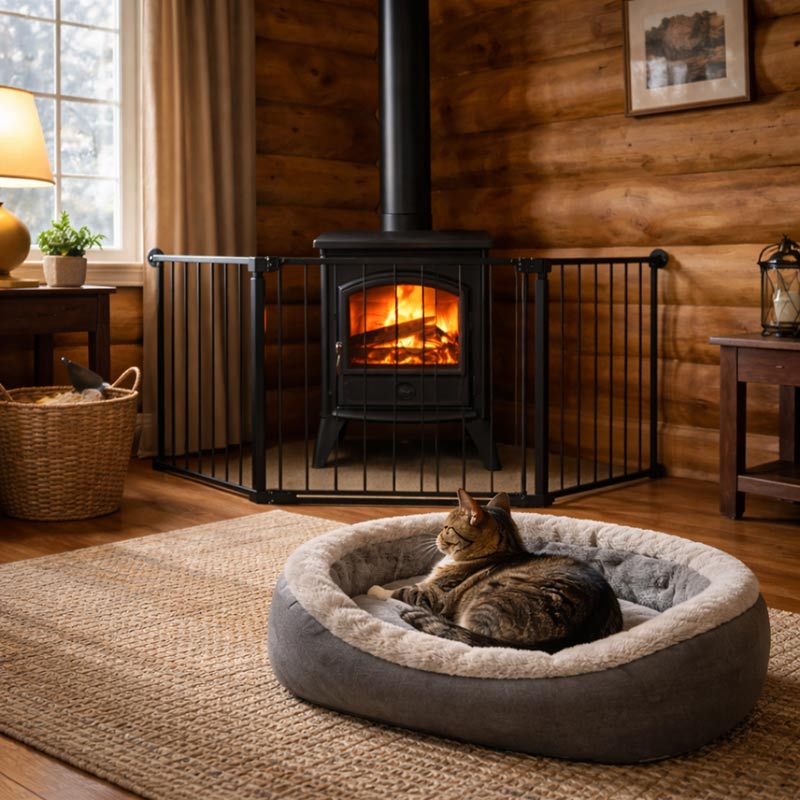
Pellet stoves give off steady, radiant heat that can be irresistible—especially to cats, who believe any warm surface is their personal throne. Dogs, on the other hand, tend to investigate anything that glows or hums. To avoid accidents, establish a clear “no-paws zone” around your stove. A fireplace screen, decorative barrier or small safety gate helps keep curious noses and wagging tails at a safe distance. Aim for about 3 feet of space around the unit to reduce the risk of accidental burns or bumped controls. Bonus: These barriers work well for little ones, too.

2. Store Pellets the Right Way

Keeping pellets nearby for easy refilling is convenient, but fuel should be stored properly. Because pellet bags are not pet-proof. Dogs may treat them like oversized chew toys, and cats might see them as the perfect burrowing spot. When storing, try to keep pellets in airtight containers. This keeps fuel dry and protected from moisture, plus it prevents spills and keeps curious pets from turning your heating supply into a play area.

3. Offer a Better Cozy Spot

If pets are crowding the stove, it’s usually because they’re seeking warmth. Give them a safe alternative they’ll love even more. Place a plush bed or folded blanket near (but not touching) the warm area. Heated pet mats designed specifically for animals are another great option. For cats, consider cushioning a window perch or elevated shelf that is a safe distance from the stove. Older pets especially appreciate gentle warmth for joints and muscles, so giving them a designated comfort zone can keep them content and safely away from hot surfaces.

4. Watch the Small Details

A few small habits can make a big difference:

-Tuck away electrical cords.

-Keep toys, collars and tags from dangling near hot surfaces.

-Avoid loose blankets that could drift too close to the stove.

-Check that controls and settings are out of reach from curious paws.

-Routine maintenance matters, too. Make sure your stove is clean, functioning properly, and venting correctly—good airflow keeps the entire household safer.

With just a few thoughtful adjustments, your pellet stove can remain the warm heart of your home without putting curious paws at risk. A little prevention goes a long way toward keeping every member of the family—two-legged and four-legged—safe and comfortable all winter long.

How Your Heating Choice Supports Forest Health

Your pellet stove does more than keep you warm and add a nice ambience to your home. Depending on the fuel you choose, it can also support forest health and reduce environmental impact. At Lignetics, the parent company of woodpellets.com, we make our pellets from responsibly sourced wood fiber and manufacturing byproducts that would otherwise go to waste—turning unused materials into an efficient, clean-burning heating solution.

At Lignetics, that commitment starts with how and where we source our materials. Our pellets are made primarily from byproducts of the lumber and wood products industry—materials like sawdust and wood fiber that accumulate during lumber production. We repurpose these materials into high-quality pellets that heat homes efficiently and consistently. In the past, much of this material ended up in waste piles, landfills or was burned on-site, contributing to emissions and air-quality concerns. We lead the industry in transforming that unused material into a clean, energy-dense fuel.

Pellet heating is about more than efficiency—it’s also about responsible forest management. We source our materials from sustainably managed forests and mills that follow established forestry guidelines, including selective harvesting, replanting and protecting wildlife habitats. By creating a productive use for low-value wood fiber and mill residuals, we help support forest health and give landowners stronger incentives to keep forests intact rather than converting them for development.

On a broader scale, pellet heating supports a renewable energy cycle. Trees absorb carbon as they grow, and the carbon released during pellet combustion is part of that same natural process.

Sustainability isn’t just a philosophy for Lignetics—it’s built into how we operate every day. As the largest residential wood pellet manufacturer in the U.S., we produce 100% natural products by upcycling wood waste across 29 mills from coast to coast. Each year, our operations convert more than 5.2 billion pounds of wood residuals into useful products, with an annual pellet production capacity of 2 million tons. That scale allows us to make a meaningful impact while delivering reliable, consistent fuel to homes nationwide.

Choosing pellets through woodpellets.com may seem like a small decision, but it supports a much larger system—one where forest byproducts are used responsibly, forests remain healthy and renewable energy continues to move forward, one warm home at a time. And on a cold winter night, that’s something you can feel good about.

Archives

});