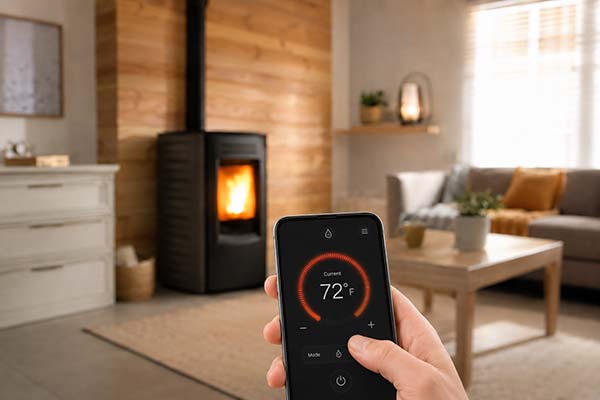
Pellet heating already gets the fundamentals right: It’s efficient, it runs on renewable fuel and it keeps a house genuinely warm. What’s changed lately is everything around the burn. The stoves are getting smarter, making them easier to run, easier to monitor and a lot less hands-on than they used to be. A few advances are driving most of that, and they’re worth walking through. They include smarter control, automatic feeding and a clearer picture of your energy use.
Let’s start with smarter control. A growing number of pellet stoves now connect to an app to control the stove from afar, so you can bump the heat up on the drive home, check the hopper before you leave for the weekend or set a schedule so the house is warm by the time you’re out of bed. Budget-friendly Wi-Fi models from brands like ComfortBilt and Ashley Hearth run through a shared “Smart Stove” app on both iOS and Android. And if your stove doesn’t have built-in Wi-Fi, you’re not stuck. A smart thermostat like Ecobee or Google Nest, wired to the stove’s thermostat terminals, adds remote on/off, scheduling and even geofencing that puts the stove into away mode when you leave home.
Premium stoves take a slightly different path to smart. Harman’s lineup pairs an EASY Touch Control touchscreen with an optional wireless room sensor you can place anywhere in the house. The stove reads that room’s temperature, adjusts its own output to hold it within a degree and flags you right on the screen when it’s time for maintenance. It isn’t phone-based the way a Wi-Fi model is, but it’s great for hands-off, set-and-forget comfort.
Pellet feeding for stoves has gotten smarter too. Older stoves needed regular babysitting, but newer ones use sensors and an automated auger to drop pellets in when needed. You get a steadier burn, more consistent heat and less ash to clean up. Higher-end models go even further, adjusting airflow on their own to hold a room at temperature without you touching anything.
Those same sensors don’t just keep the fire dialed in. They also make it easier to see exactly what your heat is doing. Most newer stoves put fuel gauges and an estimated “pounds until empty,” right on the display so you know when the hopper needs refilling. Pair the stove with a connected thermostat and you get the bigger picture, from runtime and energy use to how a cold snap or a milder week shifted your consumption. Over a full season those numbers add up to a clear sense of what you’re actually burning, and they make it easy to compare against what you may have spent before on oil or propane.
All of these advances in automation are handy, but a smart stove is only as good as what you feed it. The technology runs best on clean, consistent, low-ash fuel, which is exactly what we make. The better your pellets, the better it works. Browse our premium hardwood pellets and give your stove, smart or not, the fuel it’s built for.